



On Monday, March 30, the school invites a celebration of cultures from around the world, as students come together for the annual International Fair in the Johnson Fieldhouse. Representing their ethnic or native countries, students proudly share pieces of their heritage through traditional foods, drinks, decorations and engaging facts that invite others to learn and experience something new.
“I usually have a couple of students who organize it, and they kind of work on it throughout high school. Then, when the time comes, they train newer ones,” faculty member Tara Inman said. “This year, I had Murray Ellington. He has been doing this since 10th grade, and Banks Brown started working with him last year.”
Each personal connection students have to the countries they represent are different. Their presentations have become a way to celebrate family heritage while sharing cultural traditions with the school community.
“My mom’s great-grandparents immigrated from Sweden in the early 1900s. To prepare for the fair, I talked to my mom and grandma about what I should do, and I decided to go with candy because people love Swedish candy,” sophomore Martha Galyon said. “Then I just ordered some flax seeds and traditional decorations for the Midsummer Festival because of all the flowers.”
While Galyon’s project focused on honoring her family’s Swedish roots through traditions and popular candy, other students took a more interactive approach to showing their culture. Sophomore Veronica Rhode combined visuals, popular German treats and engaging activities to create a booth that drew in and educated her listeners.
“We prepared one day in advance and printed out pictures of Frankfurt, Germany, and got a poster. We had German candy, which was a fan favorite, along with the water pong we had displayed on our table since we can’t have beer,” Rhode said. “To anyone who asked, we shared fun facts about logos and companies owned by Germans, such as Birkenstock.”
While Rhode’s section focused on interactive items and popular candies to engage the audience, some students emphasized immersive cultural experiences. For instance, the Bahamas table brought life through music and visuals that captured attention.
“For the Bahamas, we put up a big poster with a bunch of information and a speaker to play our traditional music,” junior Omar Chemaly said. “Our most popular item would have been the TV; we had a monitor that played videos of the Bahamas, and everyone liked to look at that. We shared facts about celebrations we have, like Junkanoo, and our national fish, to try.”
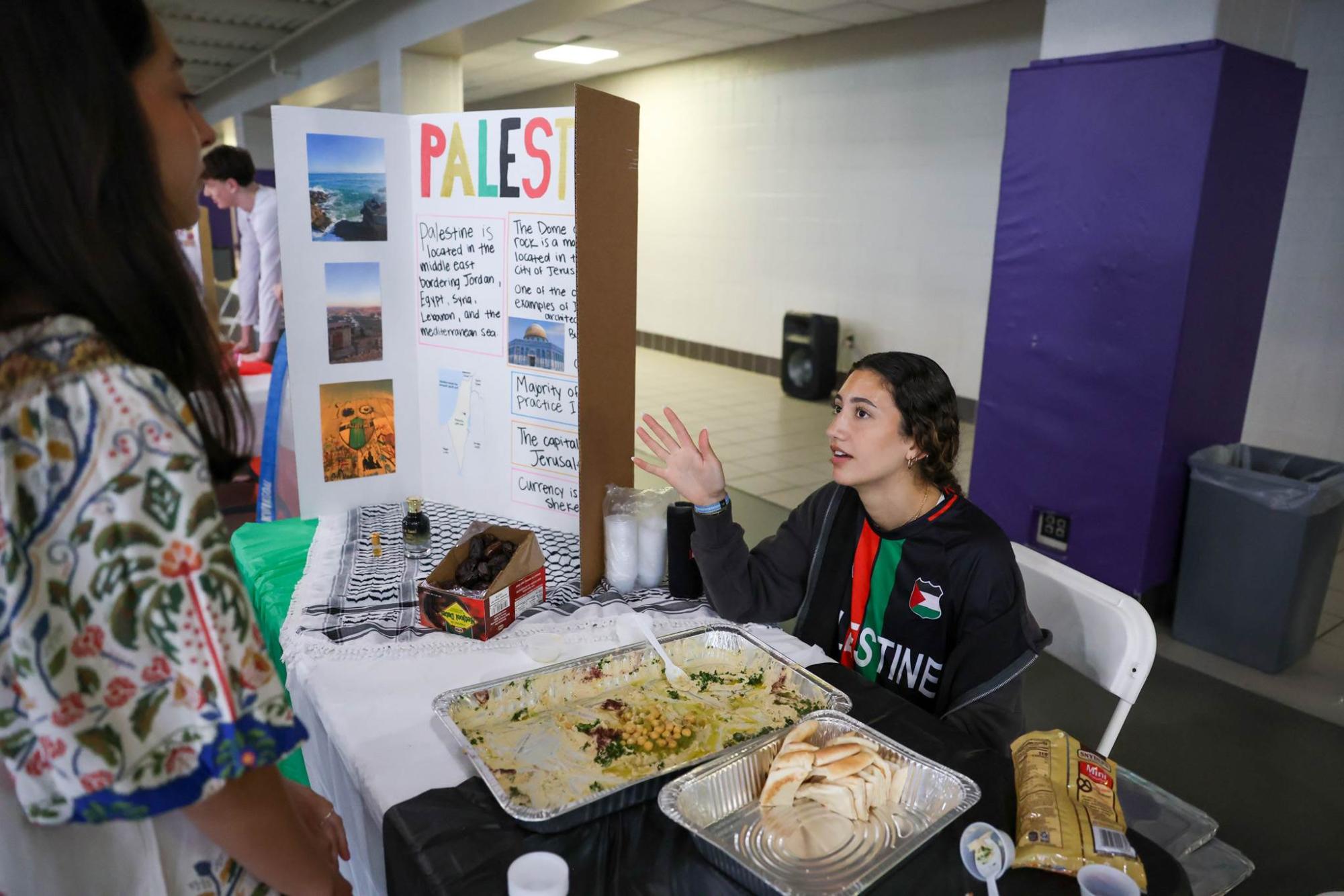
Continuing the trend of students sharing their heritage, some trifolds carried a deeper personal and cultural significance. The following presentation, for example, discusses the traditions through food, clothing and symbolism that are connected directly to family roots.
“I represent Palestine along with my sister; it’s our home country. We visited a Mediterranean bakery to receive hummus and pita bread. Then we had a poster presented from previous years, courtesy of my sisters and their friends,” sophomore Sameer Elkhatib said. “We had this traditional scarf called coffeeilla. It sort of looks like an ordinary scarf, but the designs have a deeper meaning behind them. Lastly, we brought perfumes from the Middle East and the Levant.”